
End Grain vs. Edge Grain: Which Cutting Board Is Right for You?
If you've shopped for a cutting board, you've seen both terms, and both make a great board. The difference is which way the grain runs, and that changes how the board cuts, how it wears and what it costs.
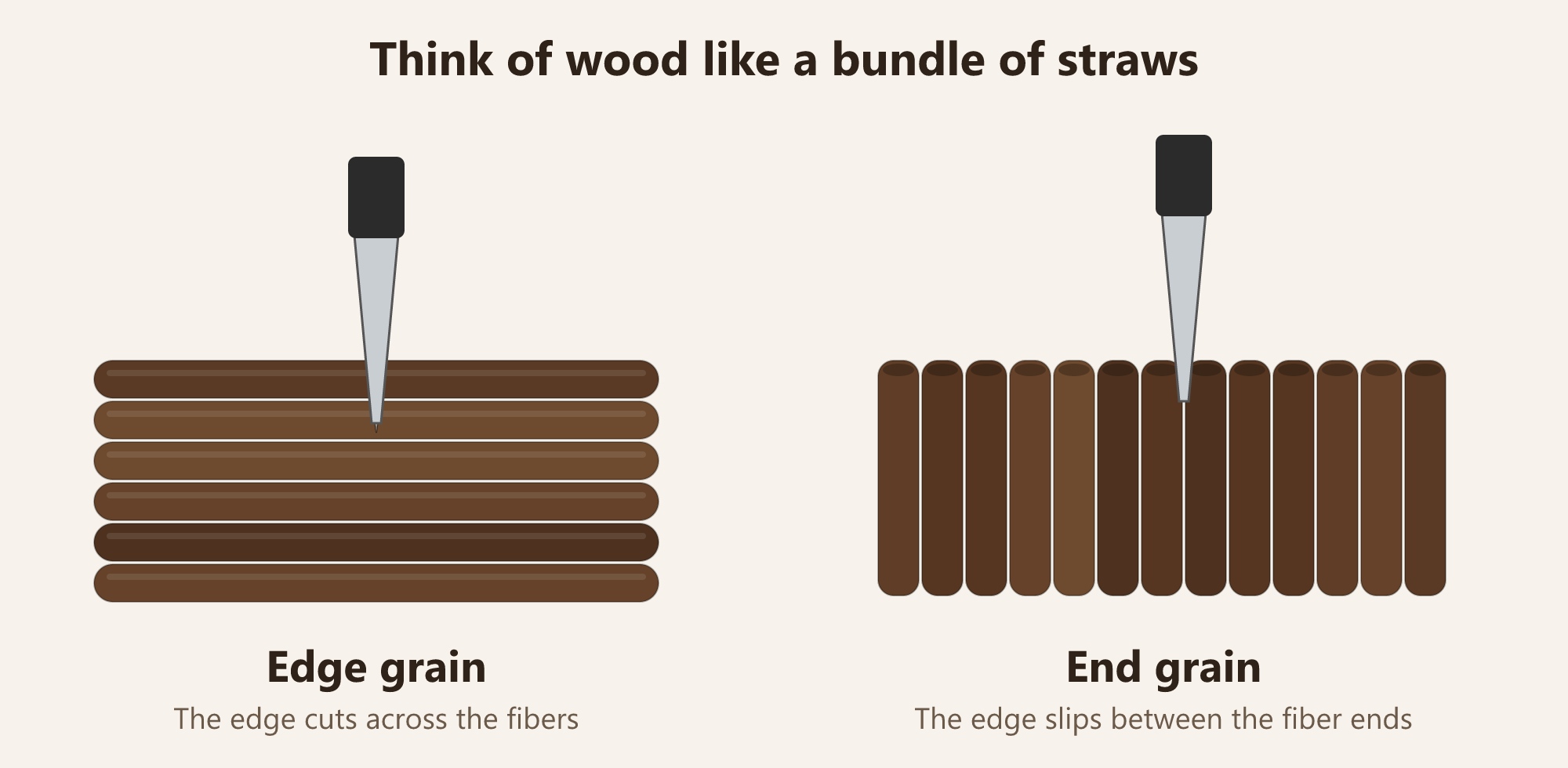
Think of wood like a bundle of straws
Wood fibers run the length of the tree.
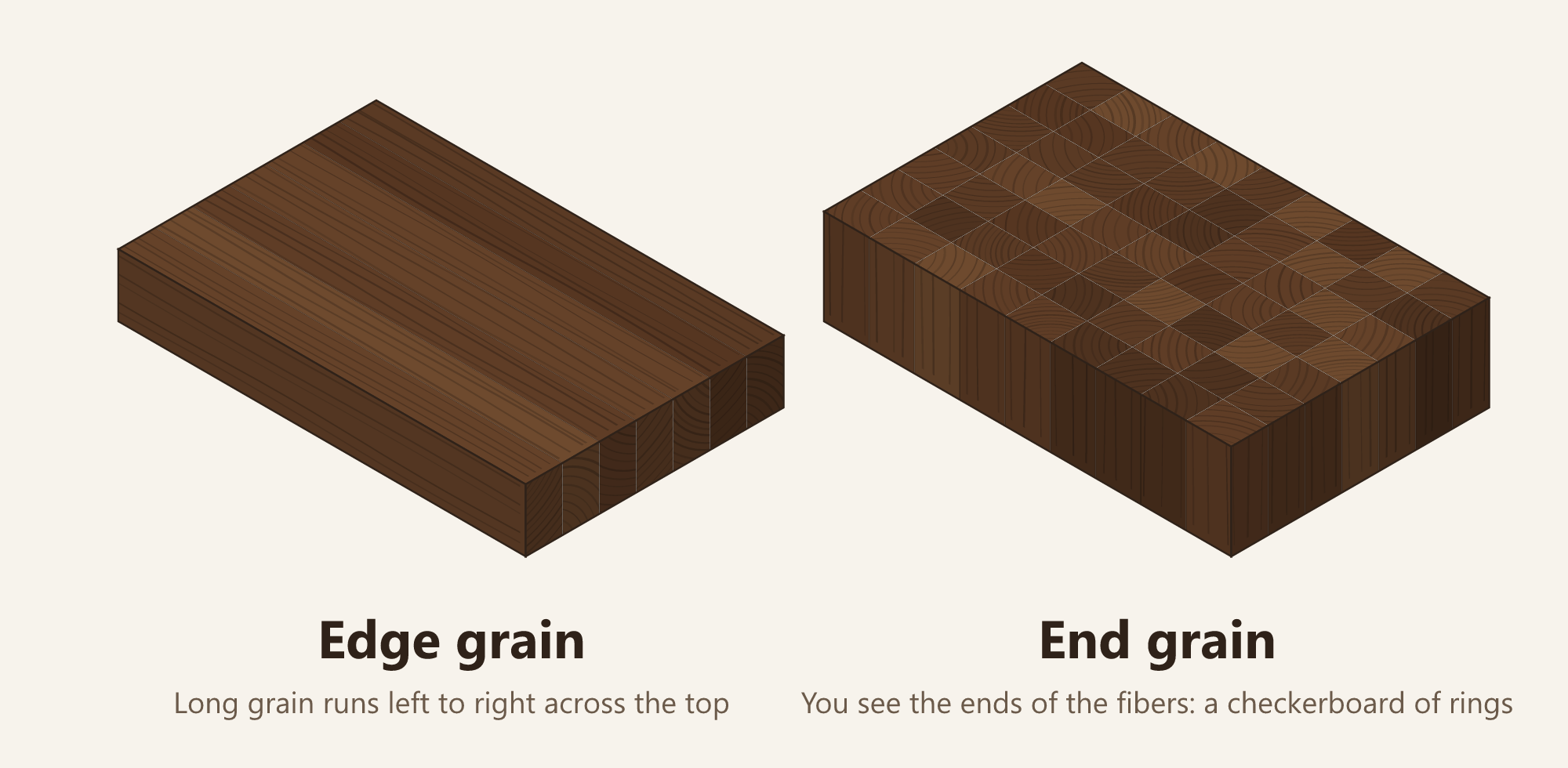
- Edge grain: strips are glued side by side, with the long grain running across the top. Your knife crosses the sides of the straws.
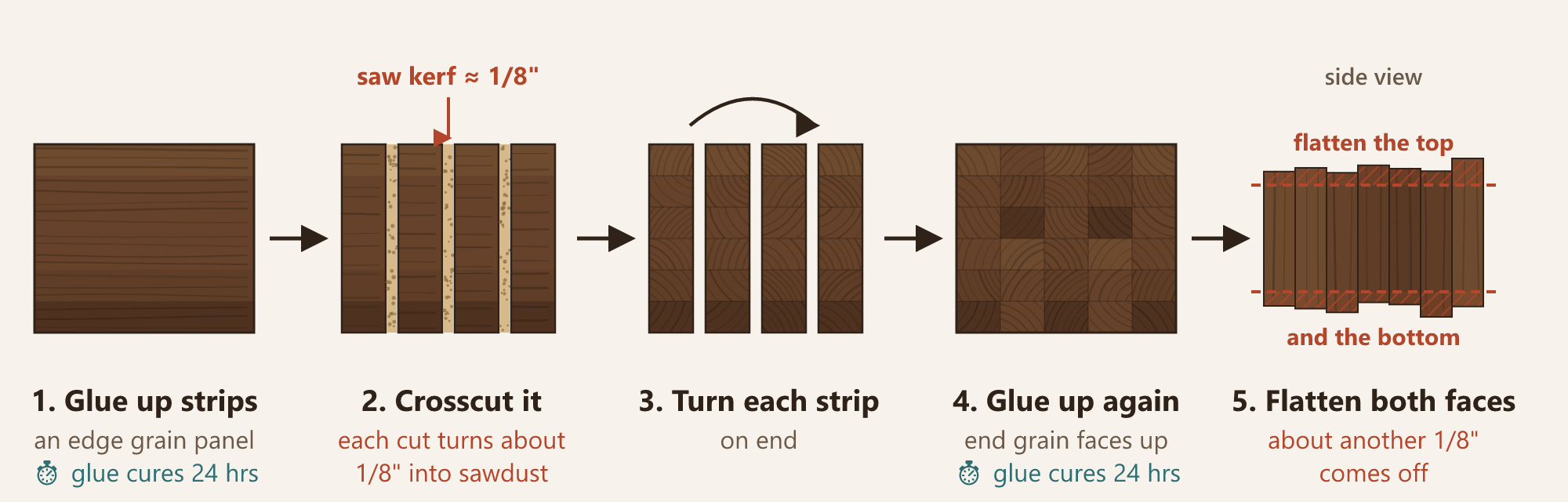
- End grain: I crosscut an edge grain panel into strips, turn each strip on end and glue it up again. Now you're cutting into the ends of the straws, which gives end grain its checkerboard look.
How they treat your knives
On end grain, the knife edge slips between the fibers, and they close back up after the blade comes out. That's easier on your knives and hides knife marks. On edge grain, marks show more over time, and it's a little harder on your edge.
Care and upkeep
End grain soaks up more oil, and more water, through all those open fiber ends, so it needs oiling more often and should never sit wet. Edge grain is more stable and a little lower maintenance.
For either one: wash it with soap and warm water or disinfect it with white vinegar, towel dry, stand it on its side, and buff in some Board Butter occasionally as routine maintenance. If the wood looks really dried out, rub in food-grade mineral oil first and let it soak in overnight, then finish with Board Butter.
End grain also needs enough thickness to stay flat. Below about 1.5" it can start to bow, especially on bigger boards, which is a big part of why I build my pitmaster blocks 3" thick. More on that in Who Doesn't Want the Extra Inch? (coming soon)
Why end grain costs more
End grain takes two glue-ups instead of one, and it loses wood at every step. Every crosscut turns about 1/8" of wood into sawdust, just from the width of the saw blade. Then, once the strips are turned on end and glued up again, they never sit perfectly level, so I flatten both faces, and that takes off about another 1/8".
The glue takes time too. Cutting boards need a special water-resistant, food-safe glue, and each glue-up needs about 24 hours to cure correctly, so that's two full days just waiting on glue. And it can't just sit out in the shop: the board has to cure in the same kind of conditions it'll live in, which takes extra space and effort. More time and more lost wood mean a higher price. That second glue-up is also what makes patterns like brick possible, which is why my patterned boards are mostly end grain.
Which one should you get?
- Everyday home prep, or keeping costs down: edge grain. My 1.5" Every Day Prep boards are edge grain, and so are some of my 2" boards.
- Easier on your knives, a statement piece, or heavier home use: a 2" end grain board.
- Pitmasters, restaurants and festivals: a 3" end grain butcher block, built for all-day slicing.
Not sure, or want something custom? Tell me what you'll use it for on my custom order form, and I'll help you pick.